

Handmade vs Mass Produced: Why Choose Handmade?
Quick Summary
Choose handmade over mass produced when the gift should feel personal, since handmade pieces carry individual character, a maker’s story and visible care. Mass-produced items usually win on price, availability and repeatability, so the right choice depends on what the gift needs to do.
- Check handmade claims by asking whether the maker designs and finishes the piece or assembles bought-in components.
- Inspect joins, materials, finish and care requirements before buying, since these show how well a piece is built.
- Compare cost per use over the item’s lifespan rather than comparing only the upfront price.
- Mass-produced items are often the better choice for many identical pieces, fast delivery or uncertain recipient preferences.
Table of Contents
- Handmade vs Mass Produced: The Core Differences
- Craftsmanship, Attention to Detail and Product Durability
- Uniqueness, Personalised Handmade Gifts and the Maker’s Story
- Handmade Gifts for Her: Matching Style and Personality
- Sustainability, Materials and What the Environmental Claims Really Mean
- Price, Total Cost and When Mass-Produced Is the Better Choice
- How to Choose a Meaningful Gift Worth Giving
- Frequently Asked Questions
Handmade vs Mass Produced: The Core Differences
Last Updated: November 7, 2026
When people ask why choose handmade over mass produced, they are usually weighing more than price. A handmade gift carries a story, a set of choices and a level of care that a factory line rarely matches. A mass-produced item, by contrast, is built for consistency, speed and a lower cost per unit. Neither is automatically better. The real question is what the gift needs to do for the person receiving it.
A 2023 consumer survey, reported by The Bodhi Press, found that 72% of shoppers were more likely to buy a product once they knew it was handcrafted or made by an artisan. That figure comes from a secondary report, and the original survey’s methodology is not published in that account, so treat it as an indication rather than a settled fact. The Bodhi Press report on artisan purchasing
At Love Me Gifts, we look at the difference from the buyer’s side. Handmade pieces usually differ in how they are made and how closely they are tied to a person or a moment. Mass production often wins on availability, repeatability and price. Handmade often wins when the gift is meant to feel personal.
Watch out: a product labelled “handmade” is not always made entirely by hand. Ask whether the maker designs and finishes the piece, or whether it is assembled from bought-in components.
Craftsmanship, Attention to Detail and Product Durability
Craftsmanship is easiest to see at the points where an item is handled, stressed or joined. A maker who checks a seam or adjusts a join tends to catch problems that a fast production line might let through.
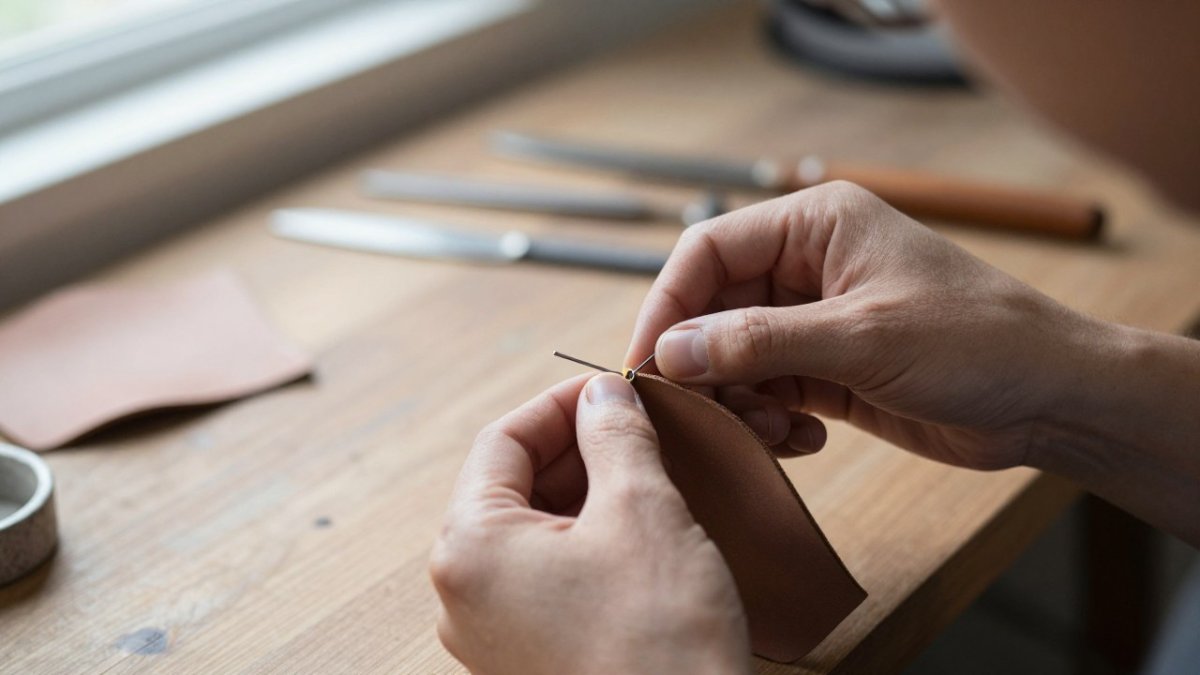
Durability is harder to judge from a product photo, so it helps to know what to inspect. When you assess a handmade gift, work through these checks:
- Construction and joins. Look for even stitching, secure clasps and findings, clean solder lines on metalwork, and joins that sit flush rather than gaping. On ceramics, check that handles and rims are smoothly finished and that the base sits flat.
- Materials. Ask what the piece is made from and whether the maker names the supplier or origin. A material list is more useful than a vague description, and it tells you how the item should be cleaned and stored.
- Finish. Run your eye along edges and inside surfaces, not just the front. Consistent finish on hidden areas usually signals a maker who works methodically rather than quickly.
- Maker transparency. A maker who can explain how the piece was built, what it is finished with and what to expect as it ages is giving you information a factory label rarely provides.
- Care requirements. Ask for care instructions before you buy. A well-made piece can still wear out if it is poorly cared for, and some materials, untreated leather, porous ceramics, plated metals, need more attention than others.
Mass production can also produce very durable goods, and repeatability means the tenth unit is usually as sound as the first. The advantage of handmade is not that it is always stronger; it is that the maker can often explain how the piece was built.
Watch out: a product labelled “handmade” is not always made entirely by hand. Ask whether the maker designs and finishes the piece, or whether it is assembled from bought-in components, because that distinction affects both the price and what you can reasonably expect to be customised.
The article lists the checks worth making when judging how well a handmade gift is built.
| Check | What to look for | Why it matters |
|---|---|---|
| Construction and joins | Even stitching, secure clasps, flush joins | Shows how well the piece is built |
| Materials | Named materials and supplier or origin | Tells you how to clean and store it |
| Finish | Consistent finish on edges and hidden areas | Signals a methodical maker |
| Maker transparency | Explains build, finish and ageing | Gives information factory labels rarely do |
| Care requirements | Instructions given before buying | Poor care can wear out a well-made piece |
Uniqueness, Personalised Handmade Gifts and the Maker’s Story
Uniqueness is one of the clearest reasons to choose handmade. Small-batch and one-of-a-kind pieces carry individual character, with variations in grain, glaze or stitch that a factory run would normally smooth out. For many people, that visible individuality is the point.
Personalised handmade gifts take this further. A maker who can add a name, a date or a chosen colour turns a general product into something tied to one relationship. Ask whether personalisation is available before you order.
The maker’s story also adds value. Knowing who made a gift, and why, gives the recipient something to talk about. That emotional connection is hard to replicate with mass-produced items, however well they are designed.
Handmade Gifts for Her: Matching Style and Personality
Choosing a handmade gift for her starts with style rather than trend. Someone who favours classic pieces will usually value a simply made, well-finished item over something bold and fashionable. Think about the materials she already uses and the colours she wears.
For a more traditional person, quiet quality often works better than novelty. A solid silver pendant, a hand-thrown ceramic bowl or a leather wallet with clean stitching tends to suit a range of tastes. Pieces with clear craftsmanship and a restrained design are less likely to feel out of place.
If you are unsure, a short note explaining why you chose the gift can help it land. The care behind the choice often matters as much as the object itself.
Sustainability, Materials and What the Environmental Claims Really Mean
Handmade is often described as more sustainable, and there are reasonable arguments for that. But these benefits depend on the specific maker, materials and processes, not on the handmade label alone.
Mass production can be efficient in its use of energy and materials per unit, especially at scale. It can also generate large volumes of waste if demand is misjudged. Neither approach is automatically lower impact.
When a seller makes an environmental claim, look for specifics: which materials are used, where they come from, and how waste is handled. General words like “eco-friendly” or “natural” are worth questioning. The Australian Competition and Consumer Commission provides guidance on making accurate environmental claims, which is a useful reference when judging what a seller says. ACCC guidance on environmental claims
Price, Total Cost and When Mass-Produced Is the Better Choice
Handmade items usually cost more per unit. The price reflects time, materials and the skill involved, and it often includes a fair return for the maker. Mass-produced goods can offer lower manufacturing costs and retail prices, which makes them the practical choice for budget gifts or large group purchases.
The more useful comparison is cost over the life of the item rather than at the till. A simple way to think about it is cost per use: divide the price by the number of times the item is likely to be used or worn. A cheaper item that wears out quickly, or that cannot be repaired, can end up costing more per use than a durable piece that lasts for years. Repairability matters here too, a piece with replaceable parts, resoleable construction or a maker willing to service it keeps its value longer than a sealed unit that has to be thrown away when one component fails.
That logic does not make handmade the automatic winner. A handmade gift that the recipient never uses has little value at any price, and a mass-produced item that does its job well for years can be the better buy. The trade-offs also vary by category:
- Furniture. Handmade or made-to-order pieces often allow repair and refinishing, but lead times are longer and delivery is more complex. Mass-produced flat-pack furniture is cheaper and immediate, and replacement parts are usually easy to source.
- Clothing. Handmade or small-batch garments can be altered and mended, and the fabric quality is often clearer. Mass-produced clothing wins on size range, availability and price, particularly for items that will be outgrown or worn hard.
- Homewares. Ceramics and textiles made in small batches offer individuality and often better finishing, but breakages may be harder to replace with an identical piece. Mass-produced ranges are consistent and easy to top up.
- Gifts. For a one-off present, the personal and emotional value of a handmade piece often outweighs the price difference. For large group gifts or workplace exchanges, consistency and budget usually point to mass-produced.
Mass-produced is often the better choice when you need many identical items, a fast delivery, or a product for a specific functional job where consistency matters more than individuality. It is also the sensible option when the recipient’s preferences are uncertain, when the item is likely to be replaced soon, or when accessibility and budget are the deciding factors.
Pricing for Love Me Gifts depends on the piece, quantity and delivery, so check the Love Me Gifts website for current prices before you decide. Comparing the upfront price with the likely lifespan, repairability and cost per use gives you a fairer basis for choosing between the two.
How to Choose a Meaningful Gift Worth Giving
Start with the person and the occasion. Ask what they value: function, beauty, sentiment or a shared memory. A meaningful gift usually connects to something they already care about.
Then assess the item itself. Check the materials, the finish, the care instructions and what the maker says about how it is made. If personalisation is offered, decide whether the details will still feel right in five years.
Finally, consider the gift as part of a relationship rather than a transaction. A thoughtful handmade piece, chosen with care, often says more than an impressive-looking item bought in a hurry. For a considered option, explore the Love Me Gifts collection and find a piece that suits the person you have in mind.
Choosing handmade over mass produced comes down to what the gift needs to say. If you want a piece that feels personal, durable and carefully made, a considered handmade gift from Love Me Gifts is a strong place to start. Shop now.
Frequently Asked Questions
Why do people choose handmade products over mass-produced ones?
Most people who choose handmade do so for three reasons: the item has individual character that a factory run cannot reproduce, the maker’s attention to finishing is usually visible, and the purchase often supports a small maker rather than a large production line. Mass-produced goods still win on consistency and price.
Are handmade products better quality than mass-produced products?
Not automatically. Handmade quality depends on the maker’s materials, skill and finishing, so two handmade items can differ widely. Handmade pieces often show closer attention to detail and can last well when well made. Mass production can be preferable for complicated products or designs, where repeatable precision matters more than individual touch. Check materials, joins, finishing and the maker’s care instructions before judging quality.
How do I choose a handmade gift for my mum who is traditional?
Start with what she already uses and wears, then pick a handmade piece that complements it rather than competing with it. Classic materials, simple forms and neutral finishes tend to suit traditional tastes. Ask yourself whether the gift reflects her routines or memories, since sentiment often matters more than trend. Love Me Gifts can help you narrow options; check current prices and availability on the website.
Are handmade gifts worth the extra cost?
It depends on what you value. Handmade items often cost more per unit because labour and smaller production runs are built into the price, but they can last longer and carry personal meaning that a mass-produced item rarely does. For everyday or disposable gifts, mass-produced options may be the better value. Pricing varies with the product and quantity, so check current prices on the Love Me Gifts website before deciding.

